"Multimedia techniques change very quickly in Korea. All of the universities have made new departments for interactive media and have had more instructors who are involved in high technology such as Web design, game character design, motion graphics, and moving image design. After the development of the Internet and multimedia games and products, many companies have needed designers with new skills. Today, some schools are combining all of their art departments into one college. For example, one university usually has three colleges of art: one devoted solely to music, one devoted to art and design, and another devoted to human movement and performance. With the development of multimedia technologies, the distinctions between these various field are disappearing. Now, it's common to use motion graphics with dance. Many universities want to expand the art fields while at the same time trying to unite them. It's a good change. If the different arts are all in one college, collaboration is easier. Students can learn new skills from each other and think about their works in other creative ways. There are problems that remain to be addressed ... Most education is based on practical business. Many instructors are second–generation designers, meaning that they learned design from the first generation of Korean designers, who didn't have a sufficient basis for study. Many instructors teach design founded on their direct experiences in the design field rather than on theory, methodology, or intensive creative thinking and experiment. Some design programs focus on multimedia classes instead of teaching basic principals of design–technology is more important than ideas."
(HyunSoo Lim, 13 December 2006)
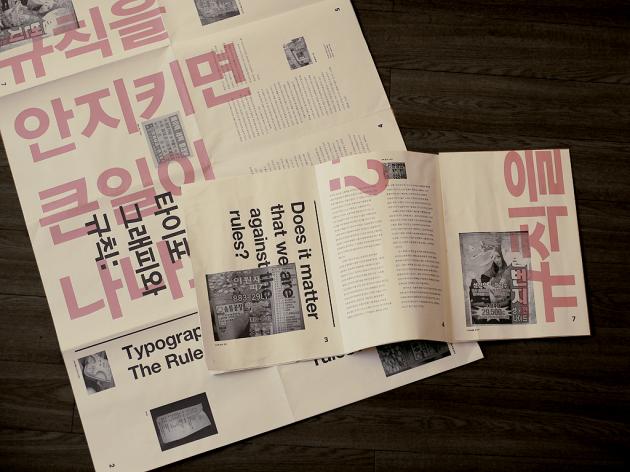
Fig.1 Minsun Eo (2008). 'Typography and the Rules'; 210 x 297 mm (folded), 594 x 841 mm (unfolded), Inkjet Printing Booklet/Poster; Exhibition at Hongdesign Gallery in Seoul, South Korea